Home › Rights and procedure
Interpreter who mistranslates in Russia: what is the risk?
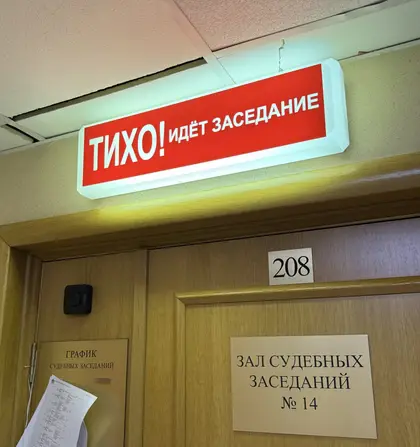
If you are a suspect or defendant in a criminal case, hire a Russian practising advocate (адвокат) as soon as possible. You have the right to a lawyer from the moment you are detained. If you have no lawyer of your own, the investigating authority will appoint one for you, paid for by the state; if you do not speak Russian, a lawyer must take part and you have the right to a free interpreter. An appointed lawyer is arranged by the investigating authority, you cannot choose them, and they will often speak only Russian, so you would have to talk through an interpreter. You can also hire a lawyer of your own choosing.
How severe is the criminal punishment for deliberate mistranslation or leaking case details?
⚠️ Prison is possible, with a legal maximum of 5 years of imprisonment. You should have a lawyer at every stage. A lawyer can use every lawful means of defence to seek a lighter outcome, but the investigator or the court decides whether to accept it, and there is no guarantee. Art. 307 of the Criminal Code makes “knowing” mistranslation a crime. Whether it was “knowing” is for the investigating authority and the court to decide.
An interpreter who has been warned and then discloses investigation materials without the consent of the investigator or inquiry officer can also face criminal liability. A foreigner has the right to an interpreter in a criminal case. For the general rules, see Basic rules for foreigners in Russian criminal cases.
| Situation | Act | Punishment (one of the following) |
|---|---|---|
| Linked to a serious or especially serious charge | An interpreter knowingly mistranslates in court, during the investigation or in other proceedings | Up to 5 years of imprisonment, or up to 5 years of compulsory labour |
| Ordinary case | Same | Up to 3 months of short-term detention; up to 2 years of corrective labour; up to 480 hours of compulsory labour; a fine is also possible |
| Leaking investigation materials | After a warning, disclosing investigation materials without the consent of the investigator or inquiry officer | Criminal liability (Art. 310 of the Criminal Code) |
📌 Liability needs both things together: the interpreter acted “knowingly”, and was warned beforehand with the warning on record.
The law also provides that an interpreter who voluntarily declares the translation false before the verdict or ruling is released from criminal liability. ⚠️ But this rule has conditions. The investigating authority or the court decides whether it applies, it may be refused, and you cannot rely on it. This kind of release should be raised and argued at the right stage and time. A lawyer can help with that lawfully, but there is no guarantee it will be accepted. Whether it applies or not, the case can still end in a conviction, a sentence or other consequences.
How mistranslation is punished in administrative and civil cases
In an administrative case, deliberate mistranslation can lead to a fine. The same applies in enforcement proceedings (Art. 17.9 of the Code of Administrative Offences). The interpreter must have been warned beforehand (Art. 25.10 of the Code of Administrative Offences).
In a civil case, the presiding judge warns the interpreter and the interpreter’s signed undertaking is added to the hearing record (Art. 162 of the Civil Procedure Code). Deliberate mistranslation can also be a crime there, but the maximum that applies to serious-charge cases does not apply.
Is a friend who helps interpret an official interpreter?
📌 What matters is whether the investigator, prosecutor or court formally appointed you as interpreter under the proper procedure. Check the procedural documents, and check whether your signature is on the warning about liability. Criminal liability depends on that status and that warning.
An interpreter is appointed by a decision of the inquiry officer, investigator or judge, or by a ruling of the court (Art. 59 of the Criminal Procedure Code). Someone who simply accompanies a person and helps informally has a different legal status from an interpreter in the proceedings. A lawyer can assess how that is classified in your case.
Real cases of interpreters being prosecuted
⚠️ Prison is possible, with a legal maximum of 5 years of imprisonment. The table lists two cases, each showing only what was decided in that case:
| Case | Date | Case number | Defendant | Charge | Outcome | Source |
|---|---|---|---|---|---|---|
| Case 1 | Reported 3 June 2021 | Not stated | Court interpreter from Uzbek into Russian, citizenship not stated | Deliberate mistranslation, ordinary case (knowingly mistranslating the presiding judge’s words and the trial record in a murder case) | Criminal case terminated, with a court fine; the court took into account admission of guilt, remorse, no prior record, employment and charitable donations | Mediazona |
| Case 2 | 10 June 2016 (case sent to court) | Not stated | A woman interpreter, name, language and citizenship not stated | Deliberate mistranslation, linked to a serious charge (distorting the meaning of the charging decision and the indictment in a serious-crime case) | The report only says the case was sent for trial; no verdict seen; not a sentencing example | Mediazona, Meduza |
The 5 years of imprisonment applies where the case is linked to a serious charge, and 5 years of compulsory labour is also possible. In an ordinary case the maximum is 3 months of short-term detention, 2 years of corrective labour or 480 hours of compulsory labour, and a fine is also possible.
Case 1 ended with termination of the case and a court fine. Case 2 only shows a case sent to court and is not a sentencing example. Two individual cases are not statistics and cannot predict anyone’s outcome. ⚠️ Case 1 ended with a court fine and termination of the case, but do not count on a result like that.
A court may look at a prior record, admission of guilt and remorse, a voluntary declaration before the verdict, and whether the warning is missing or defective. Against you may count a link to a serious charge. None of these factors guarantees any result. A lawyer can raise these circumstances lawfully to seek a lighter outcome, but the result depends on the facts and on how the defence is conducted, and you cannot rely on it.
⚠️ Only lawful defence counts. Do not trust talk of “using connections”, and do not rush to “pay to sort it out”. That is not defence.
What to do if you are summoned to testify
An interpreter who took part in an investigative action may be summoned as a witness to be questioned about what happened (Art. 56 of the Criminal Procedure Code). The investigating authority decides whether to summon. An interpreter and a witness have different procedural statuses.
📌 When you are summoned, first ask a lawyer to confirm your status and your rights.
FAQ
If an interpreter makes a mistake by accident, can they face criminal liability?
Possibly. Criminal liability requires that the mistranslation was "knowing", meaning deliberate, and that the interpreter was warned beforehand and the warning is on record. Whether it was "knowing" is decided by the investigating authority and the court on the evidence; a lawyer can assess how that evidence looks, so speak to one early.
What is the maximum sentence for an interpreter who deliberately mistranslates?
Prison is possible, with a legal maximum of 5 years of imprisonment. That applies where the case involves a serious or especially serious charge, and in that situation up to 5 years of compulsory labour is also possible. In an ordinary case the maximum is 3 months of short-term detention, 2 years of corrective labour or 480 hours of compulsory labour, and a fine is also possible. The term depends on the case and cannot be predicted, so do not count on a fine only.
If an interpreter realises they made a mistake and speaks up, can they still be prosecuted?
They still can be. The law says that an interpreter who voluntarily declares the translation false before the verdict or ruling is released from criminal liability. The investigating authority or the court decides whether the conditions are met, and it may refuse. Do not treat it as a guarantee.
How is mistranslation punished in an administrative case?
Prison is possible, and the criminal-liability maximum is 5 years of imprisonment. In administrative cases, deliberate mistranslation can also lead to a fine (Art. 17.9 of the Code of Administrative Offences). The interpreter must have been warned beforehand.
Does an interpreter who talks about the case in a WeChat group count as leaking?
Possibly. An interpreter who has been warned not to disclose investigation materials, and who discloses them without the consent of the investigator or inquiry officer, may face criminal liability. Whether it counts as a leak depends on whether there is a written warning and which materials were disclosed, so have a lawyer assess your specific facts.
How can a lawyer help?
A lawyer can use every lawful means of defence. They can check whether the charge and the warning have a proper basis, and raise a voluntary declaration, mitigating circumstances and other points at the right stage and time, to seek a lighter outcome. Where the law allows and the conditions are met, they can also seek release from criminal liability. The investigator or the court decides whether any of this applies, and there is no guarantee.
Can an interpreter in a civil case face criminal liability for mistakes?
Possibly. Criminal liability for deliberate mistranslation also applies to court proceedings, and interpreters in civil cases are warned in the same way. The maximum that applies to serious-charge cases does not generally apply in civil cases.
Related questions
About the author

Ilya Chernyshev
Partner, advocate · Chernyshev & Chernyshev Advocates
English, Chinese, Polish
Federal advocates register no.: 74/2243 · Chelyabinsk Region Bar Association
Contact
- WeChat ID: ilyachernyshev · WeChat ↗
- Phone: +7 926 720 8080
- Email: ilya@chernyshev.law
- Telegram · WhatsApp